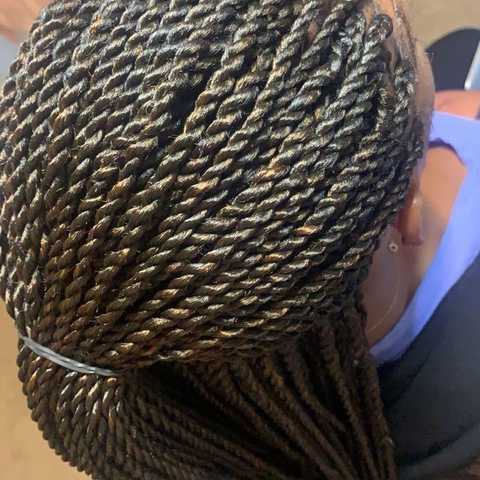
Senegalese Twist Lifespan: 6–10 Weeks and How to Extend It
By Charlotte African hair braiding | September 1, 2026
I hear this question in my chair all the time, especially when you want your money to stretch. A properly installed Senegalese Twist typically lasts 6–10 weeks. The exact number depends on how tight your roots are set, how fast your hair grows, how often you get them wet, and what Columbus weather is doing that week. I’m known for detail work that turns hair into a real "masterpiece, " and that attention to neat parts and clean installation is what helps a style stay looking polished longer.
Quick reality check: week 1–3 is the freshest look. Week 4–8 is still very normal. After week 6–8, you’ll usually see new growth and a little frizz, especially in Midtown and anywhere you’re sweating in the Georgia heat.
The 6–10 week timeline, broken down by what you’ll actually see
Here’s the honest progression I see with Senegalese twists when they’re installed neatly and you’re not constantly manipulating them.
Week 1–3: “Fresh install” stage
This is the sleek, glossy phase that makes Senegalese twists so popular. If you’ve got a busy schedule, this is also when the style feels the most low-maintenance because it holds its shape with very little effort.
Week 4–8: “Still cute, just lived-in” stage
Most people are right here. The twists still look good, but you’ll notice some fuzz at the roots and a softer finish. Columbus humidity and occasional heavy rain can speed this up, so drying well after workouts or getting caught in the rain matters.
Week 6–10: “Time to decide” stage
This is when new growth becomes more visible. Some clients push it to 10 weeks, but it depends on your edges, your scalp, and how tight you like your style to look. If you’re a shift worker, training at Fort Benning, or you’re always on the move, sweat and friction usually bring you closer to the 6–8 week mark.
What changes everything: frequent wetting without thorough drying, heavy products that build up at the roots, and daily re-styling (tight ponytails, constant updos) will shorten your wear fast.
Senegalese twist maintenance that buys you weeks, not days
When someone tells me, “I didn’t spend my entire day there and my twists are AMAZING, ” that’s the goal. I work efficiently, but I don’t skip the details that protect your hair and keep the style looking neat. After you leave my chair, these habits are what usually make the difference between a 6-week style and a 9 or 10-week style.
My weekly routine for most Midtown clients
- Scalp mist 2–4 times a week: Use a light water-based spray or a simple scalp mist. Keep it light so you don’t create buildup at the roots.
- Seal with a lightweight oil: A few drops around the perimeter and parts goes a long way. If your edges are delicate, keep oils off the hairline itself and focus on scalp and parts.
- Cleanse every 2–3 weeks: Dilute shampoo or use a braid-friendly cleanser on the scalp, then rinse well. Don’t aggressively scrub the twists.
- Dry thoroughly: This is huge in Columbus summers. Wet twists that stay damp can smell, frizz, and break down faster. Use a microfiber towel, then sit under a hood dryer if you can.
- Hands off during the day: The more you twist, rub, and restyle, the faster the roots loosen and the frizz shows.
Night routine that keeps twists sleek
A satin or silk bonnet helps more than any product. If you hate bonnets, a satin pillowcase is the next best thing. Then put twists up loosely so you’re not creating tension at the hairline.
If you see a couple flyaways, lightly re-twist those pieces with a tiny amount of mousse or foam. Keep it light. You’re maintaining, not cementing.
If you’re new to this style and want a step-by-step prep list before you sit in my chair, read what to expect and how to prep for your first Senegalese twist.
4 reasons Senegalese twists frizz early in Columbus humidity (and the fix)
I’m always straight with you. If twists look rough too soon, it’s usually one of these four things, and each one has a simple fix.
Loose roots at install
If the base isn’t set cleanly, hair slips. That’s why I pay attention to parts and tension, and I keep it comfortable. Neat doesn’t have to mean painful.
Too much water, not enough drying
Workouts, rain, and washing are fine, but damp twists are a frizz magnet. Drying is the step people rush, and it shows.
Product buildup
Heavy creams and waxy edge products collect at the roots and attract lint. Stick to light sprays, foam, and small amounts of oil.
Tension on the edges
Tight ponytails and slick buns every day can stress your hairline. Switch up your styling and keep it loose at night.
If edges are already feeling thin or sensitive, I put extra focus on what’s safe for your hairline. This guide helps you decide if twists are the right move right now: Senegalese twist for thinning edges.
When to rebook for Senegalese twists (week 6–8 is the sweet spot)
Most people are happiest rebooking around week 6–8. That’s usually the point where new growth starts to change the look, but you’re still in a healthy window to take the style down gently and protect your own hair.
A lot of my Midtown district clients like options that respect a busy schedule. If you’re commuting in from Phenix City, Fort Benning, or anywhere around Midland and South Columbus, I’ll help you pick a plan that makes sense, including quick touch-up help when your roots need attention sooner than the full redo.
If you want your twists to last: book your next appointment before you hit the “I can’t hide this new growth” stage. It’s easier to maintain neatness than to rescue a style that’s already slipping.
To see all braiding options and pick what fits your lifestyle right now, visit our services page. And if you like to look at real finished work before you commit, our gallery is a good place to start.
Senegalese Twist appointment details: I schedule Senegalese Twist appointments for about 360 minutes, and pricing starts at $220. That time is what allows me to keep the twists smooth, sleek, and polished instead of rushing the foundation.
Senegalese Twist lifespan FAQ (straight answers)
How long do Senegalese twists usually last before needing a redo?
Most Senegalese twists last 6–10 weeks. If you want the cleanest look the whole time, plan your redo around week 6–8. If you don’t mind some new growth and a softer finish, you can often stretch longer with solid night care and light product use.
Can I wash my hair with Senegalese twists and how often?
Yes. I usually recommend cleansing the scalp every 2–3 weeks. Focus on your scalp, rinse well, and take drying seriously. In Columbus heat and humidity, twists can stay damp longer than you think.
Will Senegalese twists damage my edges or natural hair?
They shouldn’t, as long as the style isn’t too tight and you’re not pulling on your edges with constant tension styles. I braid gently and keep you comfortable, and I’ll tell you honestly if a lighter option makes more sense for your hairline right now.
What is the best night routine to keep Senegalese twists neat?
Wrap them. A satin or silk bonnet is the easiest way to reduce frizz. Put twists into a loose bun or pineapple so you’re not crushing them while you sleep. If a few pieces get fuzzy, re-twist only those with a tiny amount of foam.
What products should I use (or avoid) to make Senegalese twists last longer?
Use lightweight, water-based scalp mists, a small amount of light oil, and a foam or mousse for minor touch-ups. Avoid heavy creams, waxy edge controls, and anything that leaves a thick film at the roots. Buildup attracts lint and makes twists look old faster.